
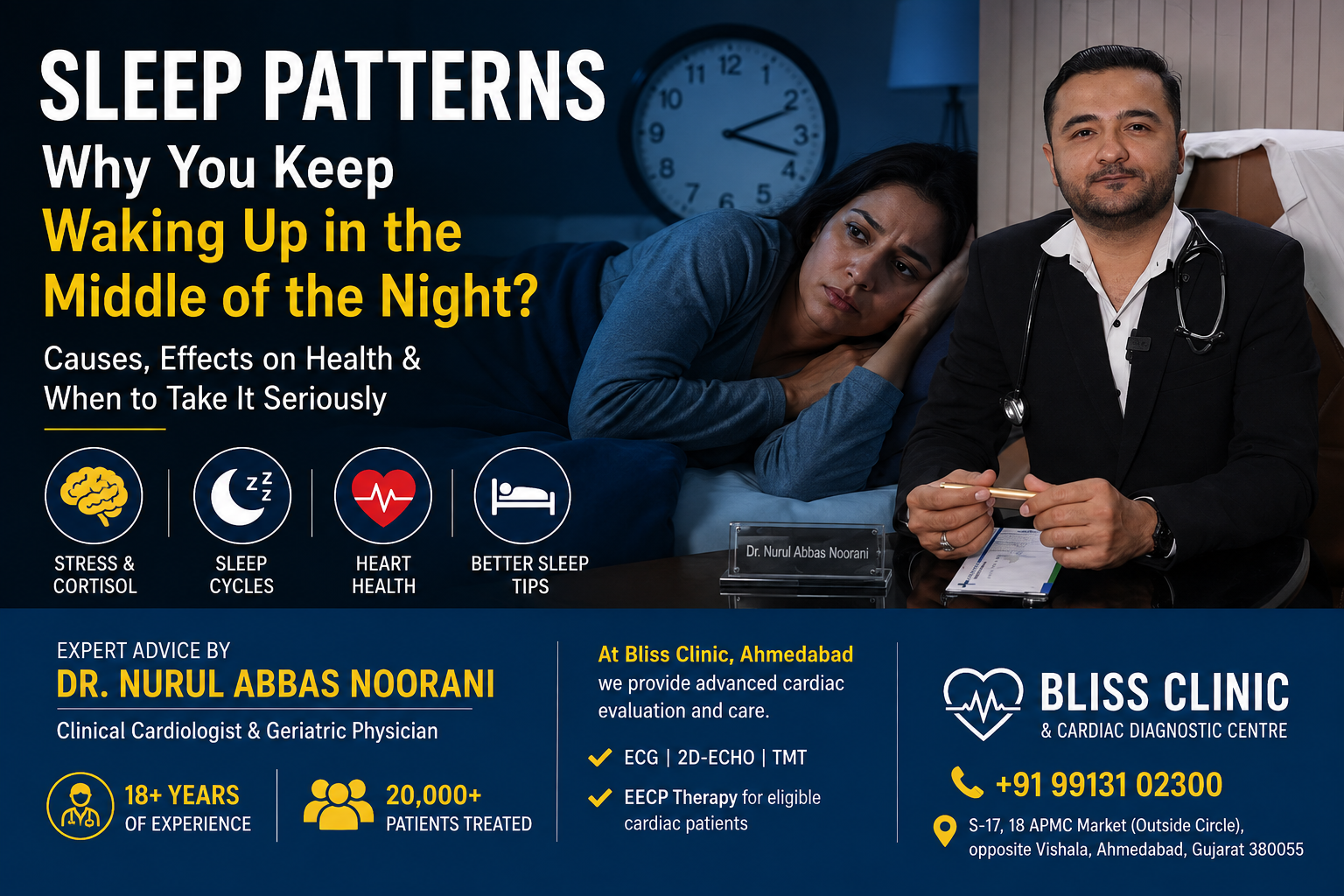
You fall asleep normally, but suddenly wake up in the middle of the night. You check the clock: 1 AM, 2 AM or perhaps 3 AM.
If this happens repeatedly, you may wonder whether stress, cortisol or even your heart is responsible.
According to Dr. Nurul Abbas Noorani, Clinical Cardiologist and Geriatric Physician at Bliss Clinic, Ahmedabad, what matters is not simply the time shown on the clock. Your overall sleep pattern, how frequently you wake, how you feel the next day, and whether you experience symptoms such as chest discomfort, breathlessness or palpitations provide a more meaningful picture.
Waking up in the middle of the night does not automatically mean you have high cortisol or heart disease. However, a persistent disturbed sleep pattern should not always be ignored—particularly when it occurs alongside cardiovascular symptoms.
What Are Sleep Patterns?
Sleep patterns describe when you sleep, how long you sleep, how regularly you sleep and how your sleep progresses throughout the night.
Your sleep pattern includes:
- Bedtime and waking time
- Total hours of sleep
- How frequently you wake during the night
- How quickly you fall asleep again
- Sleep regularity
- Light, deep and REM sleep
- How refreshed you feel the next day
Healthy sleep is therefore about more than simply spending eight hours in bed.
Most adults generally need around 7–9 hours of sleep per night.
What Is a Disturbed Sleep Pattern?
A disturbed sleep pattern occurs when normal sleep is repeatedly interrupted or does not leave you feeling adequately rested.
Common signs include:
- Difficulty falling asleep
- Frequently waking during the night
- Waking earlier than intended
- Difficulty returning to sleep
- Feeling tired despite spending enough time in bed
- Daytime sleepiness
- Poor concentration
- Irritability
- Irregular sleeping and waking times
An occasional bad night is common. The issue becomes more important when disturbed sleep happens regularly and starts affecting your daytime functioning.
Deep Sleep and Light Sleep Patterns: What’s Normal?
Sleep is not one continuous state.
Your body moves through different stages of non-REM and REM sleep throughout the night.
Light sleep occurs as your body transitions into deeper sleep. Heart rate and breathing slow, but you can still be awakened relatively easily.
Deep sleep is particularly important for physical restoration and tends to occur more during the earlier part of the night.
REM sleep is associated with increased brain activity and dreaming and generally becomes more prominent later in the night.
Moving between deep sleep and light sleep patterns is therefore completely normal. Brief awakenings can also happen as your body moves through different sleep cycles.
Why Do I Keep Waking Up in the Middle of the Night?
There isn’t one single reason.
Possible causes include:
- Stress
- Anxiety
- Insomnia
- Irregular sleeping hours
- Sleep apnea
- Chronic pain
- Menopause or hormonal changes
- Frequent urination
- Caffeine
- Alcohol
- Certain medications
- Noise, temperature or other environmental disturbances
This is why repeatedly waking during the night should not automatically be blamed on cortisol.
Why Do I Wake Up at 2 AM or 3 AM Every Night?
This question has attracted considerable attention because nighttime waking is increasingly discussed in connection with stress and cortisol.
But there is no established medical rule saying that waking at exactly 2 AM or 3 AM means your cortisol is high or that you have heart disease.
You may simply be moving into a lighter stage of sleep, where stress, anxiety, noise, temperature, discomfort, breathing difficulties or the need to urinate can make waking more likely.
Instead of concentrating only on the clock, consider:
How frequently are you waking?
How long do you remain awake?
Can you fall asleep again?
Do you experience any physical symptoms when you wake?
Do you feel rested the following morning?
These questions tell us much more about your sleep health than whether you woke at exactly 2:00 or 3:00 AM.
Can Stress Cause a Disturbed Sleep Pattern?
Yes. Stress can affect normal sleep patterns and make it harder to stay asleep.
During stressful periods, some people experience:
- Difficulty falling asleep
- Repeated nighttime waking
- Racing thoughts
- Restlessness
- Palpitations
- Muscle tension
- Anxiety
- Daytime fatigue
This can sometimes create a cycle:
Stress → disturbed sleep → daytime fatigue → more stress → further sleep disturbance
Addressing persistent stress can therefore be an important part of improving sleep.
What Does Cortisol Have to Do With Sleep?
Cortisol is commonly called the stress hormone, but cortisol itself is not harmful. Your body needs it for several important functions.
It contributes to:
- Stress response
- Metabolism
- Blood pressure regulation
- Blood glucose regulation
- Inflammation
- Sleep-wake rhythm
Cortisol normally follows a daily rhythm. Levels are typically lower during the evening and peak around the morning before waking.
Stress can affect sleep, but waking up at 1 AM, 2 AM or 3 AM cannot by itself diagnose high cortisol.
If a healthcare professional genuinely suspects an abnormal cortisol condition based on your wider symptoms, appropriate medical testing may be considered.
What Are Irregular Sleep Patterns?
Irregular sleep patterns occur when your sleeping and waking times vary significantly from one day to another.
For example, someone might sleep at:
- 10:30 PM one night
- 12:30 AM the following night
- 2 AM the next night
- 11 PM the night after that
- 3 AM during the weekend
Your body follows an internal approximately 24-hour circadian rhythm.
Regularly changing sleep and wake times can interfere with this natural rhythm.
Importantly, healthy sleep isn’t measured only by duration. The American Heart Association describes sleep health as multidimensional, including duration, regularity, timing, continuity, quality/satisfaction and daytime functioning.
Can Irregular Sleep Patterns Affect Your Heart?
Persistent poor or irregular sleep has been associated with cardiovascular and metabolic risk factors.
Research reviewed by the American Heart Association has linked different aspects of poor sleep health with:
- High blood pressure
- Abnormal blood glucose
- Obesity
- Inflammation
- Cardiovascular disease
- Other cardiometabolic problems
Sleep continuity is particularly relevant to this topic because it includes how often someone wakes during the night and how much time they spend awake after initially falling asleep.
However, this does not mean:
Poor sleep = heart disease
or:
Waking at 2 AM = heart blockage
Cardiovascular disease develops through multiple interacting factors. Sleep is one part of the bigger picture alongside blood pressure, cholesterol, diabetes, weight, exercise, smoking, diet, stress and family history.
Is Waking Up in the Middle of the Night a Heart Warning Sign?
Waking during the night by itself is not a specific sign of heart disease.
What matters more is why you woke up and what symptoms you experienced at the same time.
For example, waking because you are stressed and thinking about work is very different from waking because you suddenly cannot breathe.
Pay particular attention if nighttime waking occurs with:
- Chest pain or pressure
- Significant shortness of breath
- Racing or irregular heartbeat
- Severe dizziness
- Fainting
- Cold sweating
- Unexplained weakness
- Breathlessness when lying down
These symptoms should not simply be dismissed as stress or poor sleep.
Waking Up Gasping for Air? Don’t Ignore It
Repeatedly waking because you are gasping, choking or struggling to breathe deserves medical attention.
One possible explanation is obstructive sleep apnea.
Possible signs include:
- Loud snoring
- Gasping or choking during sleep
- Pauses in breathing noticed by another person
- Morning headaches
- Excessive daytime sleepiness
- Poor concentration
Nighttime breathing difficulties can also occur with certain heart and lung conditions.
If breathlessness is persistent, new or severe, proper medical evaluation is important.
Stress, Anxiety or a Heart Problem: How Can You Tell?
This can sometimes be difficult because symptoms overlap.
Stress and anxiety may cause:
- Palpitations
- Sweating
- Breathlessness
- Chest discomfort
- Dizziness
Some cardiovascular conditions can cause similar symptoms.
Persistent chest discomfort, breathing difficulties or palpitations therefore should not automatically be labelled as anxiety.
A doctor may consider your symptoms together with:
- Blood pressure
- Cholesterol
- Blood glucose
- Family history
- Smoking history
- Existing medical conditions
- Exercise tolerance
- Sleep pattern
Further investigation can then be recommended when clinically appropriate.
When Should Nighttime Waking Lead to a Heart Checkup?
You don’t need a heart test simply because you occasionally wake at 2 AM.
However, cardiovascular evaluation may be appropriate when a disturbed sleep pattern occurs together with:
- Recurrent chest discomfort
- Shortness of breath
- Palpitations
- Dizziness or fainting
- Unexplained fatigue
- Reduced exercise tolerance
You should also pay closer attention to cardiovascular health if you already have risk factors such as:
- High blood pressure
- Diabetes
- High cholesterol
- Obesity
- Smoking
- Strong family history of heart disease
- Known coronary artery disease
Depending on your symptoms and risk profile, cardiac evaluation may include ECG, 2D Echo, TMT, blood pressure assessment and relevant blood tests.
How Can You Improve a Disturbed Sleep Pattern?
Simple changes may help when there isn’t an underlying condition requiring specific treatment.
Maintain Regular Sleep Hours
Try to sleep and wake at approximately the same times each day, including weekends.
Aim for 7–9 Hours
Most adults should generally aim for around 7–9 hours of sleep per night.
Avoid Late Caffeine
Coffee, tea and other caffeinated drinks consumed late in the day may interfere with sleep.
Reduce Screens Before Bed
Create time to wind down rather than working, scrolling or consuming stimulating content immediately before sleeping.
Exercise Regularly
Regular physical activity supports overall cardiovascular health and can also support healthier sleep.
Manage Stress
Relaxation techniques, meditation, breathing exercises, physical activity and addressing ongoing sources of stress may help.
Don’t Rely on Alcohol for Sleep
Alcohol may initially make you sleepy but can disrupt sleep later in the night.
If sleep problems persist for weeks or substantially affect daytime functioning, seek appropriate medical advice.
What If You Already Have Heart Disease?
Healthy sleep remains important for people with cardiovascular disease, but improving sleep does not replace cardiac treatment.
Depending on the diagnosis, heart disease treatment may include lifestyle changes, medications, management of blood pressure, cholesterol and diabetes, cardiac rehabilitation, angioplasty, stenting or bypass surgery when clinically appropriate.
For selected patients with chronic angina who remain symptomatic despite appropriate treatment, or who are unsuitable for certain invasive procedures, a clinician may also consider Enhanced External Counterpulsation (EECP).
EECP is not a treatment for stress, anxiety, high cortisol or disturbed sleep. It is a cardiovascular therapy for appropriately selected patients.
Expert Insight: Dr. Nurul Abbas Noorani, Bliss Clinic Ahmedabad
Dr. Nurul Abbas Noorani is a Clinical Cardiologist and Geriatric Physician in Ahmedabad with more than 18 years of medical experience and over 20,000 patient consultations, according to his current Bliss Clinic profile.
His clinical areas include:
- Cardiovascular diseases
- Hypertension
- Diabetes
- Thyroid disorders
- Geriatric medicine
- Cardiovascular risk assessment
Dr. Noorani is the founder of Bliss Clinic & Cardiac Diagnostic Centre, Ahmedabad, where diagnostic facilities include ECG, 2D-ECHO, TMT and PFT.
He is also trained in Enhanced External Counterpulsation (EECP) for appropriately selected cardiovascular patients.
Qualifications: MBBS, PGDCC, PGDGM, CFN.
If nighttime waking is accompanied by chest discomfort, breathlessness, palpitations or reduced exercise tolerance, appropriate medical evaluation can help determine whether cardiovascular investigation is required.
Frequently Asked Questions About Sleep Patterns
What is a disturbed sleep pattern?
A disturbed sleep pattern can involve difficulty falling asleep, frequent nighttime waking, waking too early, difficulty returning to sleep or sleep that repeatedly leaves you feeling unrefreshed.
Why do I keep waking up at 2 AM?
There is no single medical reason specifically associated with waking at 2 AM. Stress, anxiety, lighter sleep stages, insomnia, sleep apnea, pain, medications and environmental factors can contribute.
Why do I wake up at 3 AM every night?
Waking at 3 AM does not have one specific medical meaning. How frequently it happens, why you wake, accompanying symptoms and how you function during the day are more important.
Does waking up at 2 AM mean cortisol is high?
No. Waking at a particular time cannot diagnose abnormal cortisol levels. Cortisol naturally follows a daily rhythm, and many different factors can cause nighttime waking.
Can stress change sleep patterns?
Yes. Stress may increase mental and physiological alertness, contributing to difficulty falling asleep, nighttime waking and difficulty returning to sleep.
Can irregular sleep patterns affect heart health?
Research has associated irregular and disturbed sleep with several cardiovascular and metabolic risk factors. However, sleep is only one part of overall cardiovascular risk.
Is disturbed sleep a sign of heart blockage?
Disturbed sleep alone is not a specific sign of coronary artery blockage. Nighttime chest pressure, significant breathlessness, fainting or other concerning cardiovascular symptoms should be medically evaluated.
When should I see a cardiologist?
Consider cardiovascular evaluation when nighttime waking occurs alongside chest discomfort, breathlessness, palpitations, fainting, unexplained fatigue or reduced exercise tolerance, particularly if you already have cardiovascular risk factors.
The Bottom Line
Waking up in the middle of the night can occur because of stress, anxiety or a disturbed sleep pattern, but waking at 1 AM, 2 AM or 3 AM does not by itself mean your cortisol is high or that you have heart disease.
Look at your complete sleep pattern instead:
Are you waking repeatedly? Are your sleeping hours irregular? Can you fall asleep again? Do you feel tired the next day?
Most importantly, pay attention to what happens when you wake.
Nighttime waking accompanied by chest discomfort, significant breathlessness, palpitations, dizziness or fainting deserves medical attention rather than simply being attributed to stress.
Healthy and regular sleep is one component of cardiovascular health, alongside managing blood pressure, cholesterol, diabetes, physical activity and other heart-disease risk factors.