
Being told that you have a heart blockage, low heart pumping function or coronary artery disease can be frightening. One of the first questions many patients ask is:
“Can my heart problem be treated without an operation?”
The answer is: sometimes, yes.
Depending on the type and severity of heart disease, treatment may include medicines, lifestyle and risk-factor management, cardiac rehabilitation and, for selected patients, non-invasive therapies such as EECP.
However, non-surgical treatment is not suitable for every heart condition. Some patients genuinely need angioplasty, bypass surgery or another cardiac procedure.
The most important step is therefore not simply trying to avoid an operation. It is finding the safest and most appropriate treatment for your individual heart condition.
Can Heart Problems Be Treated Without Surgery?
Many heart conditions can initially be managed without surgery.
For example, treatment may involve:
- Medicines to control symptoms and reduce cardiovascular risk
- Blood pressure and cholesterol management
- Diabetes control
- Lifestyle changes
- Cardiac rehabilitation
- Monitoring of heart pumping function
- Non-invasive therapies for carefully selected patients
The right approach depends on the actual diagnosis.
Someone with stable coronary artery disease may need a very different treatment plan from someone experiencing an acute heart attack or severe valve disease.
That is why treatment cannot be decided from a Google search or from the percentage of blockage alone.
Can Heart Blockage Be Treated Without a Stent or Bypass?
This is one of the most common questions asked by patients looking for heart treatment without operation in Ahmedabad.
In some cases, coronary artery disease may be managed with medicines and cardiovascular risk-factor control.
However, other patients may require angioplasty or bypass surgery.
Doctors consider several factors before recommending treatment, including:
- Which artery is affected
- Number of blocked arteries
- Location and complexity of the blockage
- Severity of symptoms
- Heart pumping function
- Previous heart attack
- Diabetes or other health conditions
- Results of cardiac investigations
- Response to medicines
A “70%” or “90%” blockage does not tell the whole story by itself.
Two patients with the same reported percentage can require completely different treatment plans.
What Non-Surgical Heart Treatment Options Are Available?
- Medicines
Modern heart treatment often begins with evidence-based medication.
Depending on the condition, medicines may be prescribed to:
- Control blood pressure
- Reduce cholesterol
- Reduce the risk of blood clots
- Control angina or chest discomfort
- Reduce strain on the heart
- Manage heart failure
- Control fluid retention
- Manage abnormal heart rhythms
Patients with reduced heart pumping function may require specific guideline-directed medicines depending on their diagnosis and overall health.
Never stop cardiac medication because you are starting a non-invasive therapy unless your treating doctor specifically advises it.
- Lifestyle and Risk-Factor Management
Heart treatment is not limited to tablets or procedures.
Reducing cardiovascular risk factors can play an important role in long-term management.
Depending on medical advice, this may include:
- Stopping smoking
- Controlling blood pressure
- Managing diabetes
- Reducing unhealthy cholesterol levels
- Maintaining an appropriate body weight
- Following a heart-friendly diet
- Regular physical activity appropriate for your condition
- Taking prescribed medicines consistently
- Attending regular follow-up appointments
These measures support treatment but do not replace angioplasty or surgery when an intervention is medically necessary.
What Is EECP?
EECP stands for Enhanced External Counterpulsation.
It is a non-invasive therapy that does not require surgical cuts or insertion of a stent.
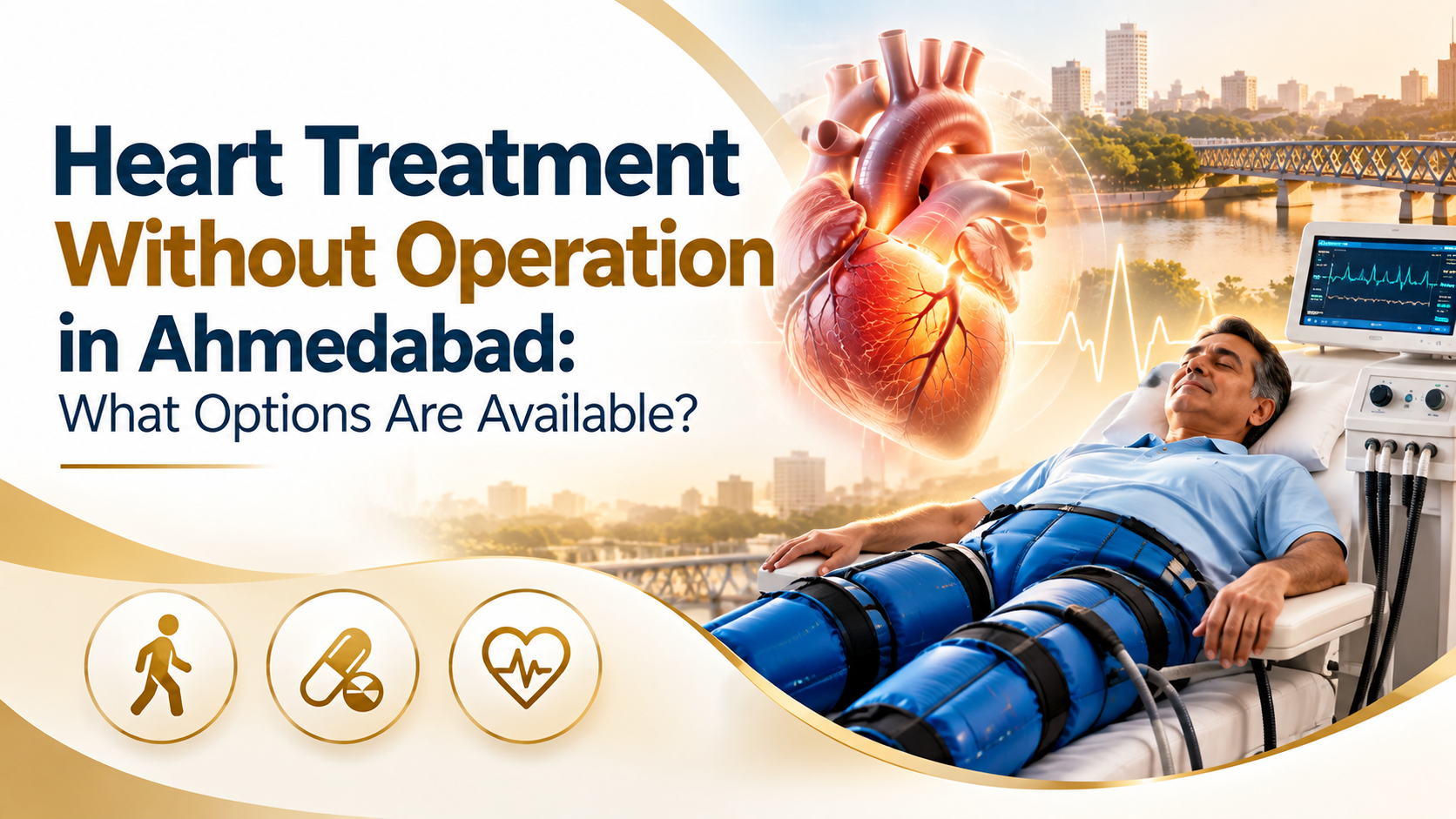
During an EECP session, the patient lies on a treatment bed while inflatable cuffs are placed around the lower limbs.
These cuffs inflate and deflate in coordination with the heartbeat.
The therapy is designed to influence circulation and may help reduce symptoms in appropriately selected patients.
EECP is mainly relevant for certain patients with chronic coronary disease who continue to experience angina despite appropriate medical treatment, particularly when additional revascularisation options are limited or unavailable.
Is EECP an Alternative to Bypass Surgery?
Not automatically.
This distinction is important.
EECP and bypass surgery are completely different treatments.
Bypass surgery creates a new pathway around severely diseased coronary arteries.
EECP is a non-invasive therapy intended primarily to improve symptoms and circulation in selected patients.
EECP should therefore not be marketed as a guaranteed replacement for bypass surgery.
If bypass has been recommended, the better question is:
“Why has bypass been advised in my case, and are there medically appropriate alternatives?”
For patients who are uncertain about a planned procedure, a qualified second opinion can help them better understand their options.
Is EECP an Alternative to Angioplasty?
Again, they serve different purposes.
Angioplasty mechanically opens a narrowed coronary artery, usually using a balloon and stent.
EECP does not physically open or remove a coronary blockage.
For selected patients with persistent angina who are not suitable for further revascularisation, EECP may be considered as a symptom-relief option.
This is why proper evaluation is essential before deciding whether EECP is relevant.
Can EECP Remove Heart Blockage?
EECP should not be described as a treatment that physically removes plaque from coronary arteries.
Some patients may experience improvement in symptoms such as chest discomfort or exercise tolerance, but symptom improvement does not mean that the original blockage has disappeared.
Patients with coronary artery disease should continue appropriate medical treatment and follow-up even if they begin feeling better.
Can Low Heart Pumping Be Treated Without Surgery?
Low heart pumping usually refers to reduced ejection fraction, or EF.
Many patients with reduced EF are initially managed using medical treatment and management of the underlying cause rather than surgery.
Treatment may include:
- Guideline-directed medicines
- Blood pressure management
- Treatment of coronary artery disease
- Management of abnormal heart rhythms
- Lifestyle changes
- Cardiac rehabilitation
- Regular monitoring of heart function
Some patients may also require an implanted device, angioplasty, bypass surgery or another treatment depending on the cause of their reduced heart function.
So, low EF does not automatically mean surgery.
But it also does not automatically mean EECP.
When Is an Operation Still Necessary?
A trustworthy discussion about non-surgical heart treatment must also explain when avoiding surgery may be unsafe.
Angioplasty, bypass surgery or another cardiac procedure may be recommended in situations involving:
- Significant or high-risk coronary artery disease
- Severe or worsening symptoms
- Acute coronary syndrome
- Certain complex coronary blockages
- Significant valve disease
- Certain rhythm problems
- Advanced structural heart disease
If you have been advised to undergo an urgent heart procedure, do not delay treatment simply while searching online for an alternative.
Heart Treatment Without Operation in Ahmedabad at Bliss Clinic
Patients exploring heart treatment without operation in Ahmedabad can consult Dr. Nurul Abbas Noorani at Bliss Clinic for evaluation of their condition and treatment options.
Bliss Clinic provides cardiac evaluation and diagnostic services including:
The clinic is located near Vishala Circle, Ahmedabad, and serves patients from Juhapura, Sarkhej, Vasna, Paldi, Makarba, Prahladnagar, Bopal and surrounding areas.
The aim of a consultation is not simply to answer:
“Can I avoid surgery?”
A proper assessment should determine:
- What heart condition do you have?
- How serious is it?
- Why has a particular treatment been recommended?
- Can it safely be managed without surgery?
- Is angioplasty or bypass medically necessary?
- Could EECP be appropriate for your symptoms and condition?
This gives patients a clearer and safer basis for making treatment decisions.
Frequently Asked Questions
Can heart blockage be treated without surgery?
Some patients with stable coronary artery disease can be managed with medicines and risk-factor control, while others require angioplasty or bypass surgery. The decision depends on the location and severity of disease, symptoms, heart function and overall health.
Can 90% heart blockage be treated without bypass?
A 90% blockage is significant, but the percentage alone does not determine treatment. The artery involved, location of the blockage, symptoms, number of affected vessels and heart function must all be considered.
Can I avoid bypass surgery with EECP?
EECP is not a guaranteed method of avoiding bypass surgery. It may be considered for selected patients with persistent angina when other treatment options are limited or unavailable.
Is EECP a non-surgical heart treatment?
Yes. EECP is non-invasive and does not require an incision, catheter or implanted stent. However, patient suitability should be assessed by a doctor.
Does EECP remove blocked arteries?
No. EECP does not physically remove coronary plaque or mechanically open a blocked artery.
Which doctor should I consult for non-surgical heart treatment in Ahmedabad?
Patients can consult a cardiovascular physician who can review their symptoms, ECG, echocardiogram, angiography and other cardiac reports before recommending whether medical treatment, EECP or an invasive procedure is appropriate.
Take the Right Next Step
Wanting to avoid an operation is understandable, but the safest heart treatment is the one that matches your actual diagnosis.
Some patients can be managed using medicines, lifestyle care and other non-surgical approaches. Selected patients with chronic coronary disease and persistent angina may also be evaluated for EECP.
Others may genuinely benefit from angioplasty, bypass surgery or another intervention.
If you are looking for heart treatment without operation in Ahmedabad, consult Dr. Nurul Abbas Noorani at Bliss Clinic for an evaluation of your symptoms, previous reports and available treatment options.
Medical Reviewer: Dr. Nurul Abbas Noorani
Clinical Cardiologist & Geriatric Physician
Bliss Clinic, Ahmedabad
Last Reviewed: September 2026
This article is for patient education only and does not replace individual medical advice, diagnosis or emergency treatment.