If your doctor has recommended EECP therapy, one of the first questions that may come to your mind is:
“What actually happens during 40 sessions of EECP therapy?”
Many patients know that EECP is a non-surgical treatment for blocked heart arteries, angina, breathlessness, and reduced heart function. However, very few understand what the day-to-day experience feels like.
At Bliss Clinic, Ahmedabad, we frequently hear questions such as:
- Will EECP hurt?
- How long does each session take?
- When will I start feeling better?
- What changes should I expect after 10, 20, or 40 sessions?
- Is it normal to feel tired during treatment?
This guide walks you through a typical EECP 40 sessions experience, week by week, so you know exactly what to expect during your treatment journey.
First, What Happens During EECP Therapy?
EECP (Enhanced External Counter Pulsation) is a non-invasive treatment that improves blood flow to the heart.
During treatment:
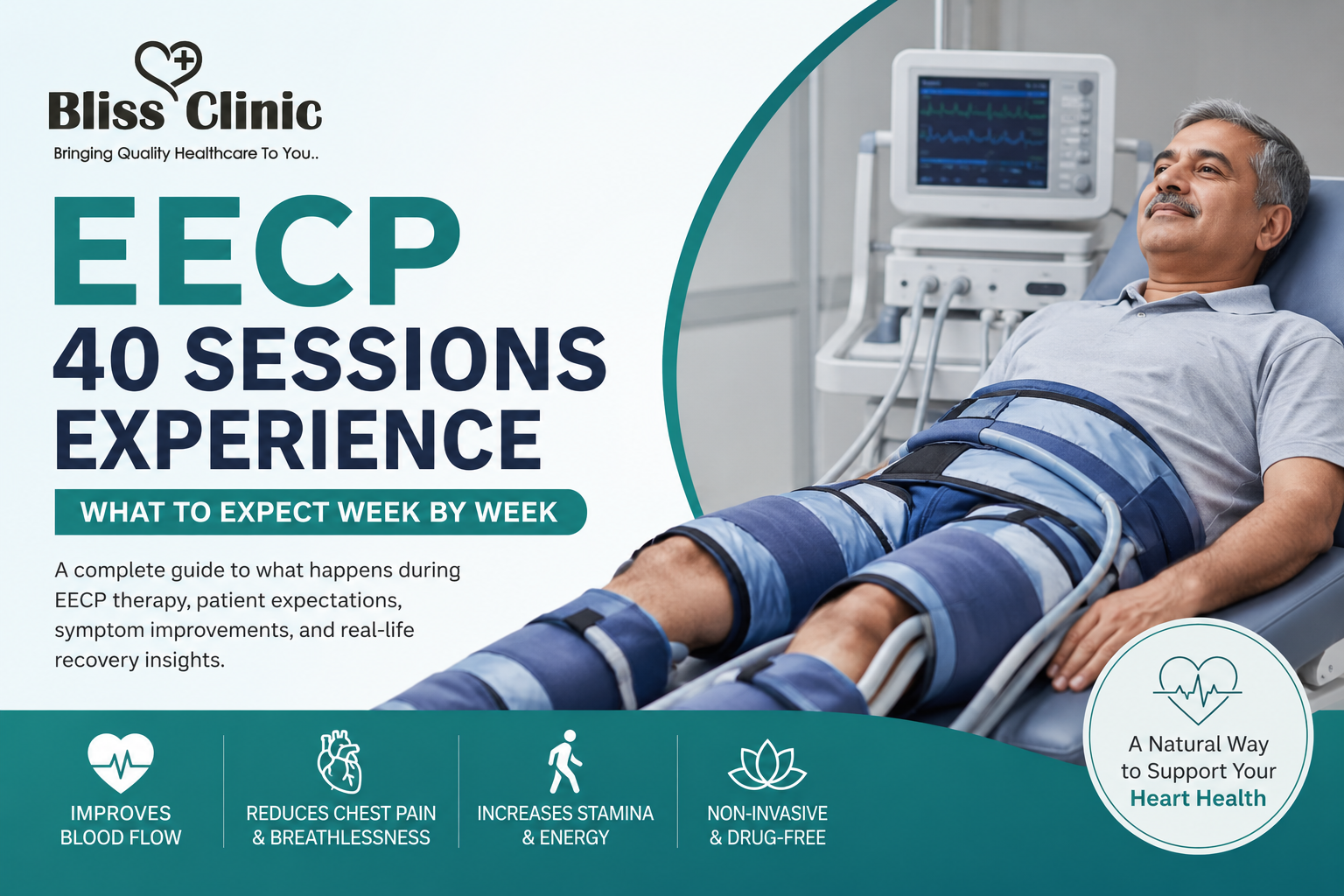
- Large cuffs are wrapped around your calves, thighs, and buttocks.
- The cuffs inflate and deflate in synchronization with your heartbeat.
- The process pushes oxygen-rich blood toward the heart.
- Over time, the body develops collateral blood vessels, often called a “natural bypass.”
Each session typically lasts one hour, and most patients complete:
40 sessions over 7–8 weeks
Most patients attend:
- 5 sessions per week
- Monday to Friday
- One hour per day
What Does the EECP Machine Feel Like?
This is one of the most common concerns.
Most patients describe it as:
- A strong rhythmic massage
- Gentle squeezing of the legs
- Similar to a blood pressure cuff inflating repeatedly
- Comfortable after the first few sessions
During the first few days, the pressure may feel unusual because the cuffs inflate firmly.
However, most patients adapt quickly.
Many even:
- Watch TV
- Listen to music
- Use their phone
- Fall asleep during sessions
Week 1 (Sessions 1–5): Getting Comfortable
What You May Feel
The first week is primarily an adjustment period.
Common experiences include:
- Awareness of the cuff pressure
- Mild leg soreness
- Slight fatigue after sessions
- Increased urination due to improved circulation
- Better sleep quality
Some patients notice immediate relaxation after treatment.
Others feel no major difference yet.
Both are completely normal.
Typical Patient Thought
“The machine felt strange on the first day, but by the third session I was comfortable and relaxed during treatment.”
What Improves?
At this stage:
- Circulation begins improving
- Heart workload starts reducing
- Energy changes are usually subtle
Do not expect dramatic results yet.
Week 2 (Sessions 6–10): The Body Starts Adapting
Around the second week, many patients begin noticing small positive changes.
Common Improvements
- Less tiredness during daily activities
- Slightly easier walking
- Better stamina
- Reduced heaviness in the chest
Patients who previously felt exhausted after climbing stairs may notice mild improvements.
What Patients Often Report
“I wasn’t cured overnight, but I felt less exhausted at the end of the day.”
What’s Happening Inside?
The heart begins receiving improved blood supply.
Blood vessels start responding to repeated enhanced circulation.
Week 3 (Sessions 11–15): Confidence Begins Returning
This is often where patients become more motivated.
Many begin noticing measurable improvements.
Possible Changes
- Less breathlessness
- Better walking tolerance
- Reduced chest discomfort
- Improved sleep quality
- Better overall mood
Family members often notice changes before the patient does.
Real-Life Observation
Patients frequently say:
“I realized I was walking farther without stopping.”
Week 4 (Sessions 16–20): Halfway Through the Journey
By the midpoint, many patients report significant improvement compared with their starting condition.
What Happens During This Phase?
You may notice:
- Increased energy
- Reduced angina episodes
- Less dependence on rescue medications
- Better exercise tolerance
For patients with low heart pumping function (EF%), progress may still be gradual, but improvements often become more noticeable from this point onward.
What Patients Tell Us
“Earlier I had to stop every few minutes while walking. Now I can finish my walk comfortably.”
Week 5 (Sessions 21–25): Visible Improvement for Many Patients
This is often considered a breakthrough period.
According to clinical experience, many patients begin experiencing more obvious benefits during weeks five and six.
Common Improvements
- Longer walking distances
- Reduced chest pain
- Less breathlessness
- Better stamina
- More confidence in daily activities
Why This Happens
The collateral blood vessels being stimulated by EECP continue developing and supporting blood flow.
The heart starts benefiting from improved circulation.
Week 6 (Sessions 26–30): Daily Life Feels Easier
Many patients report that everyday tasks become easier.
Activities such as:
- Climbing stairs
- Shopping
- Household chores
- Walking outdoors
may require less effort.
Emotional Benefits
An often-overlooked benefit is improved confidence.
Patients frequently become less fearful about physical activity.
Patient Reflection
“I finally felt like I had my life back.”
Week 7 (Sessions 31–35): Stronger Results Become Noticeable
At this stage, patients often compare how they feel now versus before treatment.
The difference can be substantial.
Common Benefits
- Significant reduction in angina symptoms
- Better oxygen delivery
- Improved endurance
- Less fatigue
- Better quality of life
Many patients who were previously considering surgery begin feeling much more comfortable with daily activities.
Sessions 36–40: Completing the Program
The final sessions help reinforce the long-term benefits of treatment.
What Most Patients Notice
- Improved stamina
- Better breathing
- Reduced chest discomfort
- Enhanced confidence
- Increased physical activity levels
By now, patients are usually very comfortable during sessions.
Many are surprised at how quickly the treatment period has passed.
Real Patient Experiences at Bliss Clinic
Many patients visiting Bliss Clinic had severe symptoms before starting EECP.
Common complaints included:
- Chest pain while walking
- Breathlessness
- Fatigue
- Multiple blocked arteries
- Inability to undergo bypass surgery
After completing approximately 40 sessions, many reported:
- Improved walking capacity
- Reduced chest discomfort
- Better energy levels
- Improved quality of life
- Greater confidence in performing daily activities
Individual results vary, but patient satisfaction remains consistently high.
Are There Any Side Effects During 40 Sessions?
EECP is generally well tolerated.
Some patients may experience:
- Mild leg soreness
- Temporary fatigue
- Minor skin redness
- Mild bruising
These effects are usually temporary and resolve quickly.
Most patients continue their normal daily activities during treatment.
When Do Most Patients Start Feeling Better?
Although every patient is different:
| Stage | Typical Experience |
| Sessions 1–10 | Adjustment phase |
| Sessions 10–20 | Early improvements |
| Sessions 20–30 | Noticeable benefits |
| Sessions 30–40 | Significant symptom relief |
Many patients begin noticing meaningful improvement between weeks 5 and 6.
Frequently Asked Questions
Does EECP hurt?
No. Most patients describe it as a firm massage-like sensation.
Can I walk after treatment?
Yes. EECP is an outpatient procedure, and patients usually return home immediately after each session.
Can EECP replace bypass surgery?
Some patients experience significant symptom improvement with EECP, but treatment decisions should always be discussed with an experienced cardiologist.
How long do EECP benefits last?
Studies and clinical experience suggest benefits may last several years, particularly when combined with healthy lifestyle changes.
Is EECP safe for elderly patients?
Yes. EECP is often recommended for elderly patients who may not be ideal candidates for surgery.
Final Thoughts
Starting EECP therapy can feel uncertain at first, especially when you’re committing to 40 sessions.
However, understanding what happens during EECP therapy makes the journey much easier.
Most patients describe the experience as comfortable, relaxing, and rewarding. While results vary from person to person, many notice gradual improvements in energy, breathing, walking capacity, and overall quality of life over the course of treatment.
If you’re considering EECP treatment in Ahmedabad, consult with Dr. Nurul Abbas Noorani at Bliss Clinic to determine whether EECP is the right option for your heart health journey.
Book a consultation today and take the first step toward a healthier heart—without surgery.